


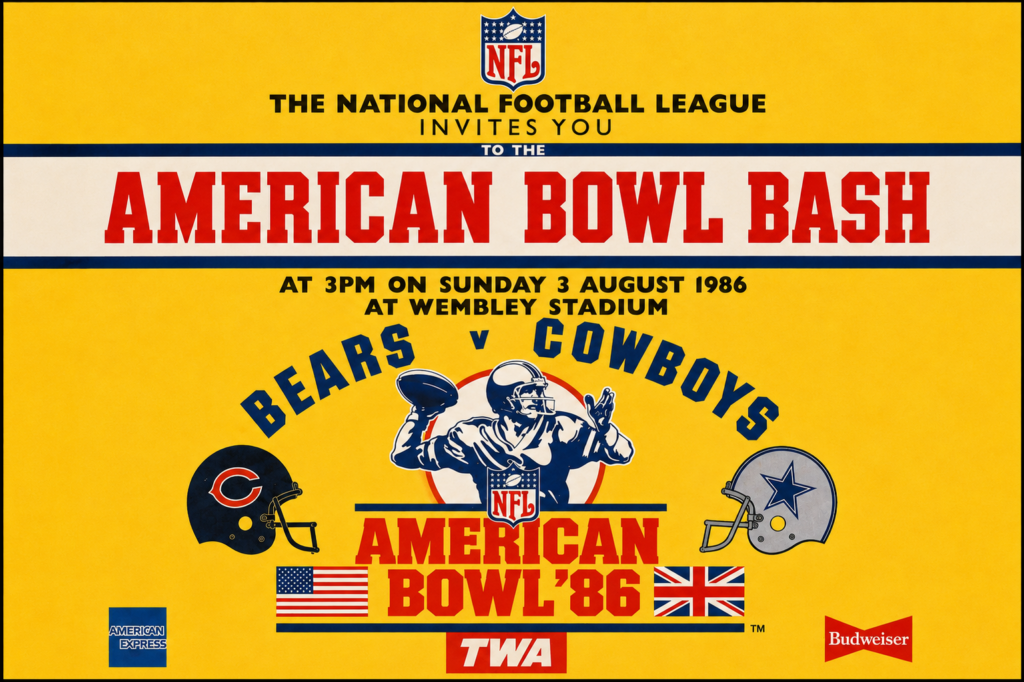
On August 3, 1986, the reigning Super Bowl champion Chicago Bears faced “America’s Team,” the Dallas Cowboys, in a landmark spectacle that helped change the course of American football in Europe.
There had been an NFL exhibition game in London before.
Three years earlier, the Minnesota Vikings defeated the St. Louis Cardinals 28–10 in the Global Cup at Wembley Stadium. That game was independently promoted by British entrepreneur John Marshall and attracted 32,847 spectators. NFL Commissioner Pete Rozelle was cautious at the time, suggesting that the league might occasionally stage games in Europe to develop interest rather than seriously attempting to export the NFL.
But the game played at Wembley on August 3, 1986, was something entirely different.
This was not an experiment quietly testing the waters. This was the NFL turning toward Europe, opening the throttle and sending its biggest possible attraction across the Atlantic.
If the 1983 Global Cup had been a shot across the bow, the inaugural American Bowl was a freaking ICBM.
The reigning world champion Chicago Bears against the Dallas Cowboys.
Mike Ditka against Tom Landry.
Walter Payton against Tony Dorsett.
William “The Refrigerator” Perry and the legendary Bears defense against Ed “Too Tall” Jones,
Randy White and the Cowboys.
How much bigger could the NFL possibly have made it?

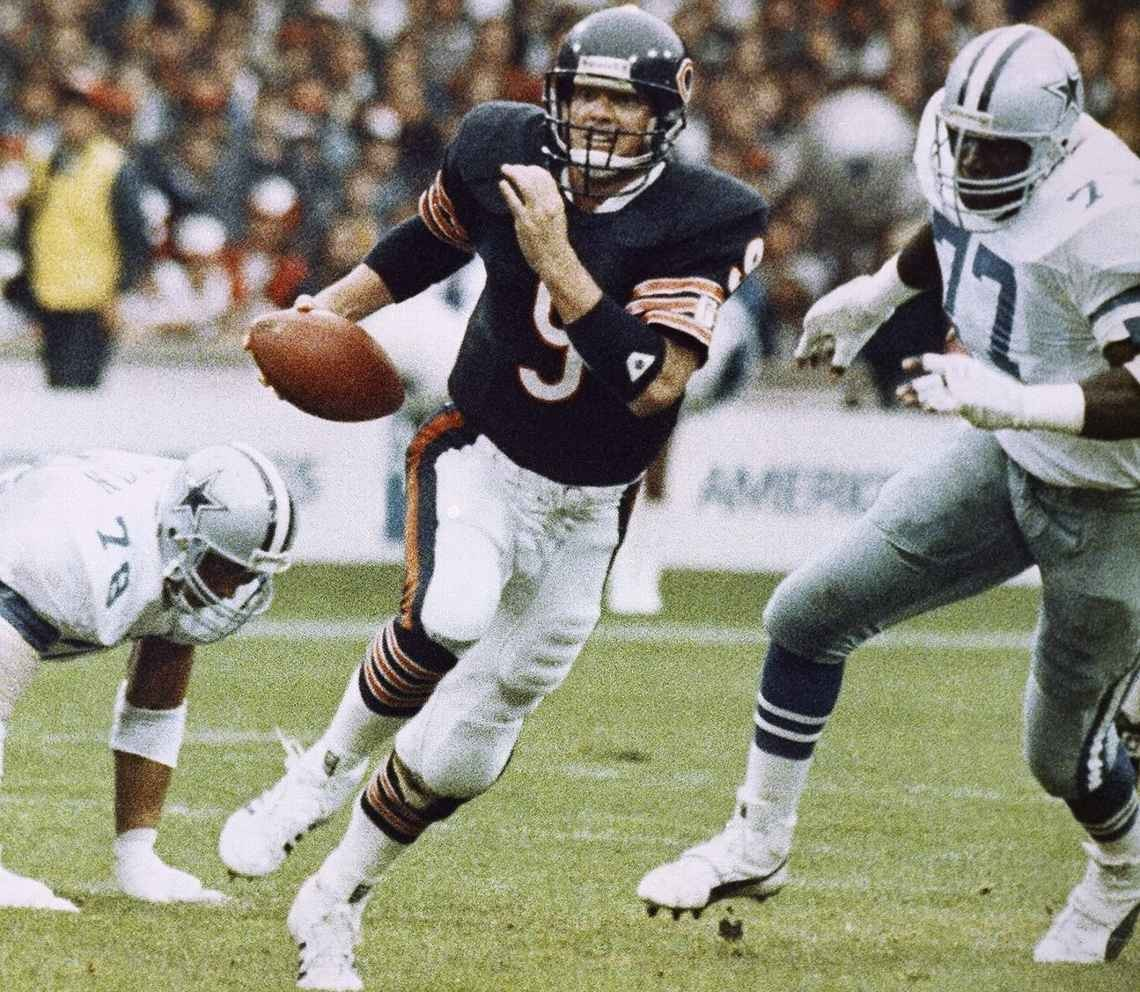
AP Photo/Ron Heflin
The perfect teams at the perfect moment
British interest in the NFL had grown rapidly after Channel 4 began showing weekly highlights in 1982. By the time Chicago demolished the New England Patriots 46–10 in Super Bowl XX, the NFL’s British television audience had reportedly reached a level comparable with Match of the Day, the country’s long-established soccer highlights institution.
And the Bears were far more than merely the NFL champions.
They were a cultural phenomenon.
Jim McMahon had the headbands, sunglasses and attitude. Payton was one of the greatest players the sport had ever seen. Mike Singletary, Richard Dent, Dan Hampton, Steve McMichael and the rest of Buddy Ryan’s defense had terrorized the NFL. Perry had become one of the most recognizable athletes in America, while the “Super Bowl Shuffle” had turned the team into pop stars.
Then there were the Cowboys, still carrying the enormous international appeal of “America’s Team.” Landry’s fedora was almost as recognizable as the star on the Dallas helmet, while Dorsett, White and Jones gave the British audience another collection of names they already knew from television.
“You couldn’t have hand-picked two better teams,” British journalist Keith Webster later said of the matchup. Dallas was a massive attraction, but even the Cowboys were overshadowed by the traveling circus surrounding the Bears.
McMahon arrived wearing military fatigues. Payton arranged his own limousine. The British media followed Perry everywhere. At one point, approximately 80 Bears players went jogging through Hyde Park, creating the rather extraordinary sight of an NFL roster thundering through central London.
The Cowboys contributed to the spectacle as well. Landry posed in a traditional British policeman’s helmet, while Too Tall Jones appeared outside Buckingham Palace alongside members of the Dallas Cowboys Cheerleaders.
This was precisely what the NFL had sent to Europe: stars, personalities, cheerleaders, television cameras and two of the most famous uniforms in American sports.
Rain, Wembley and The Fridge
When game day arrived, so did the rain.
Not a light English drizzle, but a relentless downpour that continued throughout the day. Nevertheless, an officially recorded crowd of 82,699 packed the old Wembley Stadium. Many historical accounts have rounded the figure to more than 86,000, but either way, the message was unmistakable: Britain wanted the NFL.
The game itself was not a classic. It was the beginning of the preseason, the conditions were dreadful and appearances by established stars such as Payton and McMahon were understandably brief.
Nobody in the stadium seemed particularly concerned.
Chicago safety Dave Duerson produced the game’s opening touchdown, recovering a Tony Hill fumble and returning it 48 yards. Perry then delivered the moment everybody had been waiting for, lining up in the Bears’ backfield and crashing into the end zone from one yard out.
Wembley erupted.
Dallas managed only two field goals as Chicago won 17–6. The Bears’ touchdowns had fittingly come from two defensive players, with Perry reprising the short-yardage role that had made him one of the breakout stars of the previous season.
The weather was miserable. The football was sometimes untidy. But the result of the NFL’s European experiment could not have been clearer. The British crowd stayed, cheered and embraced the entire production.

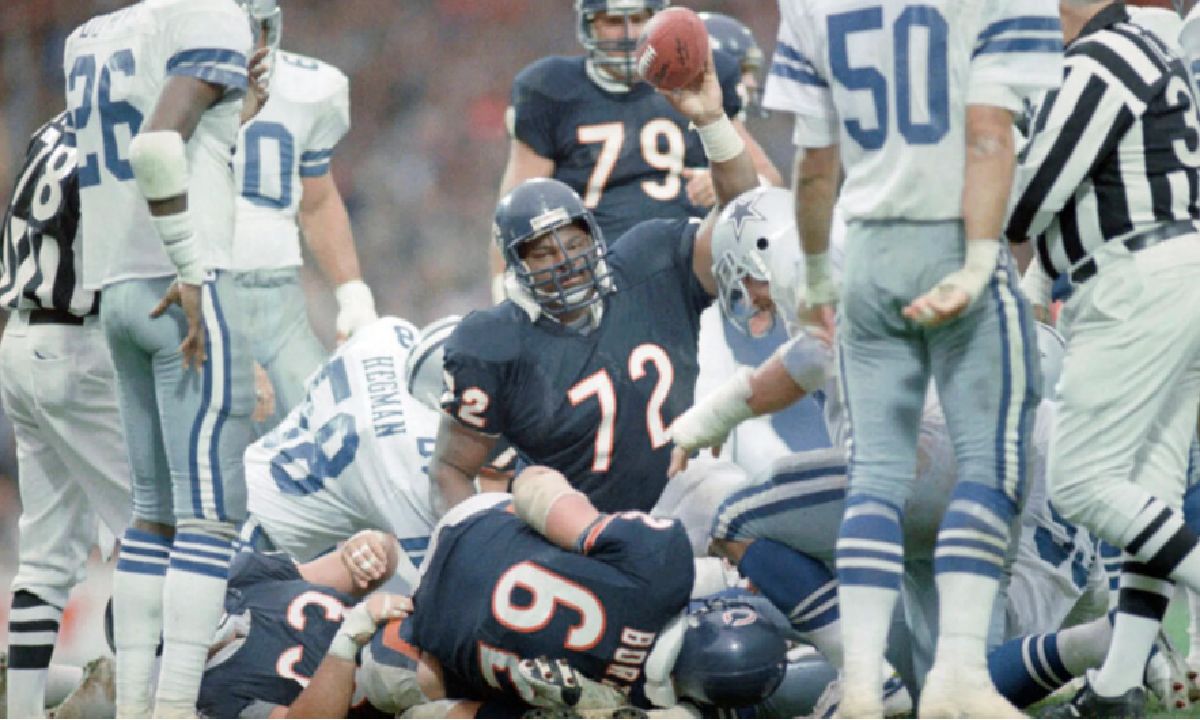
AP Photo/Ron Heflin
A primitive International Player Pathway
There was even a remarkable footnote that now looks like a distant ancestor of the NFL’s International Player Pathway. British kicker Russell Willsmer, who was playing domestically in the newly established Budweiser League, was reportedly brought into the Bears’ orbit during the visit and given an opportunity to kick. It was not the structured pathway that exists today, but the principle was already there: find athletic talent playing the sport outside North America and give it exposure to an NFL environment. At the time, British club football itself was only beginning to organize. The Budweiser League had launched earlier in 1986, offering teams equipment discounts, coaching opportunities and access to training camps as the domestic game expanded at extraordinary speed.
The day the NFL recognized Europe
NBC treated the American Bowl as a major event, assigning Dick Enberg and Merlin Olsen to the broadcast. They were the network’s leading NFL commentary pairing and had called Chicago’s Super Bowl victory only months earlier. More importantly, the league office noticed what had happened. The success of the game led to further American Bowls at Wembley and eventually to games in Berlin, Barcelona, Tokyo, Dublin, Mexico City and other international markets. The World League of American Football followed in 1991, providing Europe with professional teams of its own. Regular-season NFL football finally arrived in London in 2007.
All of those developments have their own histories. But when tracing the line from Channel 4 highlights to the London Monarchs, NFL Europe, the International Series and today’s regular-season games across the continent, August 3, 1986, remains one of the critical dates.
That was the day the NFL stopped merely wondering whether Europe might be interested.
Europe had filled Wembley Stadium in a downpour and provided the answer.
Treat yourself to one of the groundbreaking moments in European American football history and watch the complete NBC broadcast on YouTube. It will probably be the best thing you watch all weekend.