
Taking the NFL Abroad: The Travel and Logistics Jobs Behind International Games

Every international NFL game begins long before kickoff, and most of the people who make it possible never appear on the broadcast. The league’s 2026 slate is its biggest yet: nine games across four continents, seven countries, and eight stadiums. Behind each one sits a network of travel planners, hotel teams, and operations staff moving thousands of fans, players, and staff members to the right place at the right time.
A Record Slate Means Record Logistics
The 2026 international schedule visits Melbourne, Rio de Janeiro, London for three games, Paris, Madrid, Munich, and Mexico City. According to the league, Melbourne, Rio de Janeiro, and Paris are hosting regular-season games for the first time, and 62 regular-season games had been played outside the United States before this season began. Paris is staging its first on October 25 at Stade de France, and the build-up there has been a reminder of how quickly local conditions can change. Each destination brings its own challenges: different time zones, languages, venues, and travel rules. Readers following the game’s growth can track the buildup across AFI’s Europe coverage and its reporting from Mexico.
nfl-abroad-travel-logistics-1.png | Alt: Travel coordinator planning flights and hotels for a group trip to a game
The Travel Side: From Fan Packages to Team Itineraries
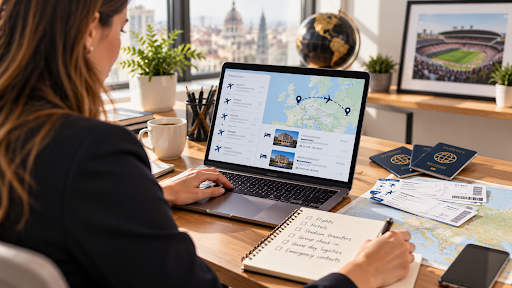
Getting people to an international game is a booking problem first. Fans need flights, hotels, ground transport, and match tickets that line up, often across several countries and currencies. Groups, corporate hospitality clients, and supporters’ clubs add layers of complexity, and every change in a flight or hotel booking ripples through an itinerary. That is the daily work of travel advisors and coordinators: building trips, managing changes, confirming documents, and keeping clients informed.
Much of this can be done online. Searching availability, booking through reservation systems, and handling client questions by email, phone, or video does not require sitting in a particular city, which is why remote travel roles have become common. For anyone drawn to this side of the sport, online travel agent jobs typically involve researching destinations, building itineraries, booking flights, hotels, and tours, and answering client questions before and after a trip.
The Hospitality Side: Hotels on Game Week
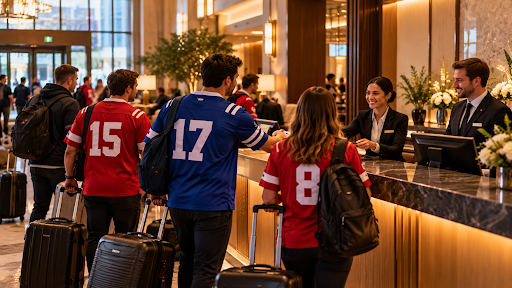
Once fans, media, and staff arrive, the work shifts to hotels and venues. A busy game week puts pressure on front desks, reservations teams, food and beverage operations, and sales and catering departments, and it requires staff who can handle large groups and last-minute requests. These jobs are largely on-site by nature. Large hotel operators advertise a wide mix of them, and the openings listed under concord hospitality jobs show the range, from front desk and night audit roles to sales, catering, and meetings and events management.
nfl-abroad-travel-logistics-2.png | Alt: Hotel front desk welcoming football fans on game week
The Operations Layer Fans Rarely See
Around the travel and hospitality teams sits an operations layer: ticketing and credentials, venue and security coordination, ground transport, freight and equipment shipping, and communications with local partners. These functions run on checklists, contingency plans, and people who stay calm when something changes. The table below summarizes where different roles typically sit.
| Role Type | Typical Focus | Where the Work Happens |
| Travel advisor or coordinator | Itineraries, bookings, client communication | Often remote |
| Reservations agent | Hotel and package bookings | Remote or on-site |
| Front desk and guest services | Check-in, requests, group arrivals | On-site |
| Meetings and events manager | Group functions, catering, venue coordination | On-site |
| Operations and logistics coordinator | Transport, scheduling, supplier coordination | Hybrid |
Breaking Into Sports and Event Travel
There is no single path into this world, but the common skills are easy to name: careful attention to detail, comfort with booking tools, clear communication, and the ability to stay organized when plans change. Many people start in reservations, front desk, or coordinator roles and build toward event or group specialties. Language skills and an understanding of international travel documents help, and because demand follows the schedule, candidates should expect busy seasons and quiet ones.
Conclusion
As the NFL keeps adding international games, the number of jobs required to stage them grows too. Some of those jobs are in a stadium on game day, but many are in an inbox, a booking system, or a hotel lobby days earlier. For anyone who loves football and is drawn to travel or hospitality, the sport’s global push offers more ways in than the sidelines.