
The Long Punt Home: Darren Bennett and Australia’s NFL Revolution
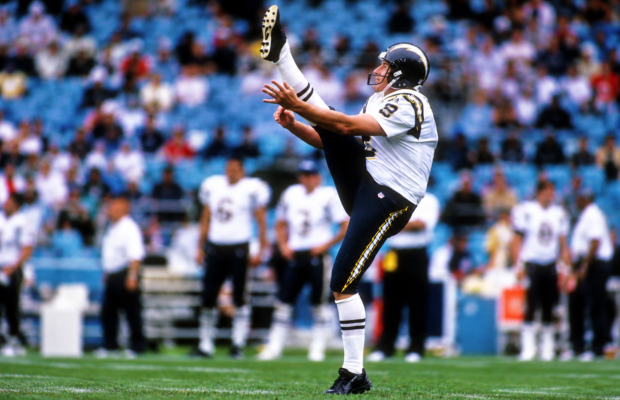
When the Los Angeles Rams and San Francisco 49ers ran onto the Melbourne Cricket Ground for the first NFL regular-season game played in Australia, the moment felt new. The pathway that helped bring the NFL to Melbourne, however, has been under construction for more than 60 years—one booming, tumbling punt at a time.
Watching from his home in Tulsa while recuperating from ankle-replacement surgery, Darren Bennett thought the NFL had got the presentation right. A crowd of 100,021 packed the MCG on a Friday morning, the stadium had been transformed and Melbourne was allowed to look like Melbourne rather than the set of another Crocodile Dundee sequel.
“My wife Rosemary said they did a wonderful job of showing Melbourne without getting too kitschy,” Bennett said. “They showed the stuff you needed to see.”
If the NFL’s arrival at the MCG represented the destination, Bennett remains the central figure in the journey.
Ridgway opens the door
Colin Ridgway was the pioneer. A Melbourne-born Olympic high jumper, Ridgway reached the Dallas Cowboys in 1965 and became the first Australian to play in the NFL. His stay amounted to three games and 13 punts. He proved the jump between the two football codes was possible, but he did not yet create a bridge.
Bennett did that.
He was not a specialist hidden at the edge of an Australian rules roster. The 6-foot-5, 235-pound full-forward kicked 208 goals in 74 games for Melbourne after also playing for East Fremantle and West Coast. When injuries ended his AFL career in 1993, an almost accidental American adventure began.
Bennett and Rosemary had won airline tickets and used them for a California honeymoon. A call to the San Diego Chargers produced a tryout. The first long snap reportedly hit the novice in the face. The kicks that followed changed his life.
Bennett believes he was the best punter in the Chargers’ 1994 camp. The coaches could see the leg, but they could not overlook what was missing.
“I beat the guy out by a mile, but I had no experience,” Bennett recalled. “They were like, ‘We just can’t trust a guy that’s never played before.’”

Amsterdam provides the proving ground
San Diego kept him on its practice squad and then sent him to the Amsterdam Admirals for the 1995 World League season. That was where I first saw the future arrive wearing a punter’s number.
At Amsterdam’s Olympic Stadium, a returner found what he believed was an express route to the end zone. Bennett, the erstwhile Melbourne Demon, changed his travel plans and decleated him.
The gasps on the Admirals sideline were audible. Few among the roughly 4,000 spectators—sorry, 7,816, the number I wrote on a slip of paper after the NFL vice-president on hand passed it to me for delivery to the public-address announcer—could have realized that the stock of the Australian punter in American football had just begun a long, upward trajectory.
Bennett remembers an adventure in a crumbling old stadium where one end zone bordered concrete, the players made up parts of the experience as they went along and he rode a bicycle from central Amsterdam to practice. But it was also a serious audition.
He led the World League in net punting and made the all-league team. More importantly, he caught the snaps and functioned under game pressure. Chargers general manager Bobby Beathard relied on reports from Admirals coach Al Luginbill.
The questions back in San Diego were basic: Did he lead the league? Did he make the all-world team? Did he drop any snaps? The answers were yes, yes and no.
“That gave them the trust that I could function in a game, even though they never really saw the film,” Bennett said. “Without NFL Europe, that probably never happened.”
Bennett changes the position
Back in San Diego that autumn, he was no longer a curiosity. Bennett averaged 44.7 yards per punt, finished second in the NFL and reached the Pro Bowl as a rookie. He also repeated the Amsterdam lesson in the United States, famously flattening Pittsburgh Steelers returner Andre Hastings.
American punters were expected to kick and then make themselves scarce. Bennett had spent his first sporting life in a game without pads, where avoiding contact was not an option.
The bigger revolution came off his boot. Bennett is credited with introducing the Australian drop punt into the NFL. By holding the ball nose-down, he could control its flight and bounce instead of simply launching a conventional spiral as far as possible. It gave coverage teams another way to strand opponents near their goal line.
Once treated as an exotic wrinkle, the “Aussie punt” is now used at every level of American football.
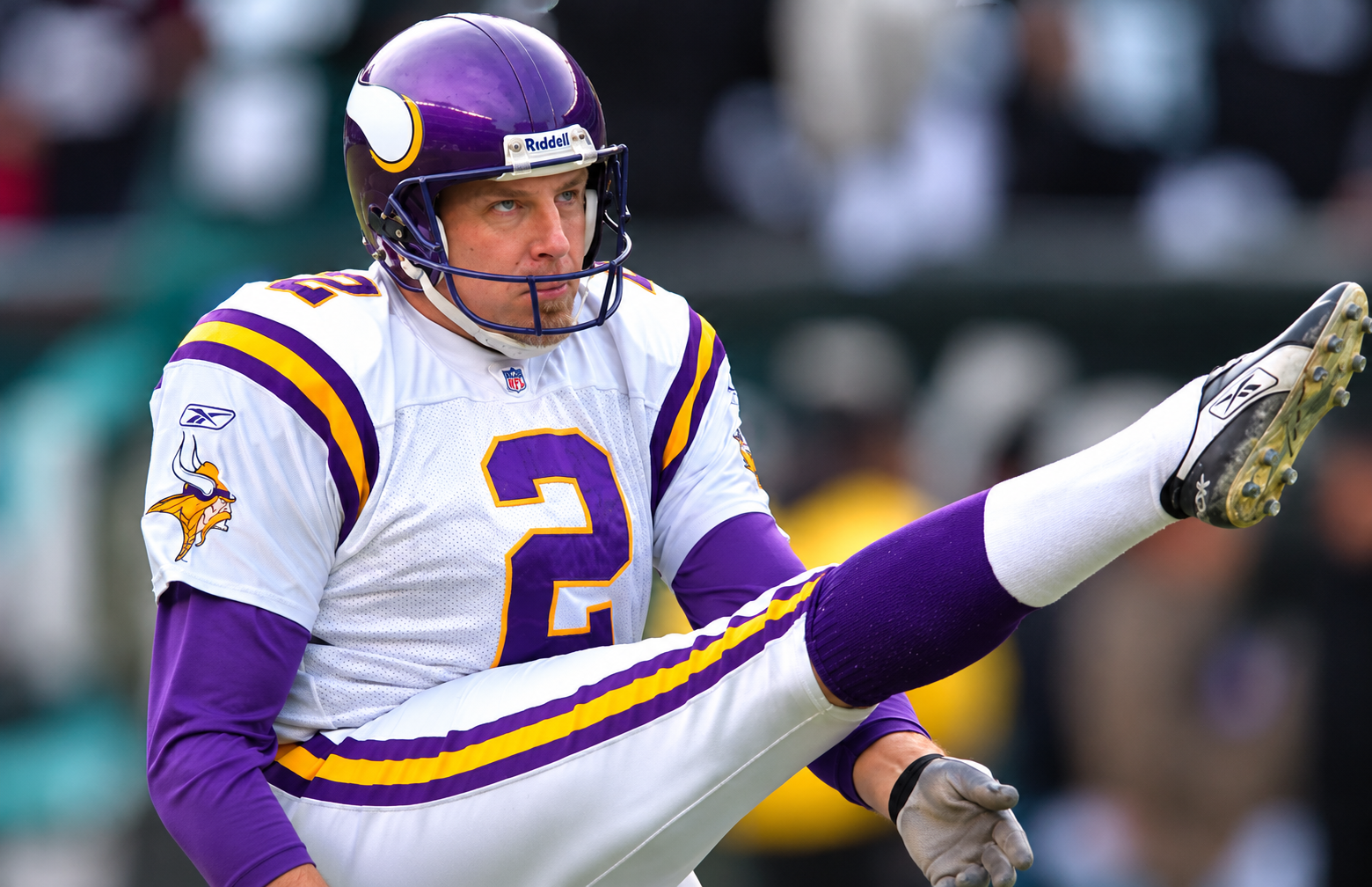
Bennett played 11 NFL seasons with the Chargers and Minnesota Vikings, made a second Pro Bowl in 2000 and was selected to the NFL’s 1990s All-Decade Team. In 2012, Chargers fans voted him into the club’s Hall of Fame.
Most importantly, he made the next Australian less strange.
Australians follow Bennett’s path
Ben Graham and Sav Rocca crossed after long AFL careers. Mat McBriar became a two-time Pro Bowler with Dallas. Specialist academies then created a formal route through American colleges, producing Jordan Berry, Cameron Johnston, Mitch Wishnowsky, Michael Dickson, Arryn Siposs, Tory Taylor and Jeremy Crawshaw, among others. Australians began collecting Ray Guy Awards as the best punters in college football.
College football is now inundated with them. Roughly 70 Australians are punting at major NCAA programs this season, yet only a handful occupy NFL roster places. Bennett says there is a technical reason for that disappointing conversion rate.
In college football, every player on the punt team may release downfield when the ball is snapped. In the NFL, only the two outside gunners can leave before the ball is kicked. That makes hang time far more important because the rest of the coverage unit starts later and the returners are considerably more dangerous.
“The guys that have translated across are the ones that have both techniques,” Bennett explained. “They have a spiral technique and they also have the drop-punt technique.”
A college coach trying to win on Saturday may be perfectly happy with a rollout punt that gets the ball on the ground and makes it difficult to return. An NFL punter must also be able to stand deep in his own end zone at Soldier Field, Lambeau Field or Buffalo and drive a spiral through the wind.
“You cannot come to your head coach in pregame and say, ‘We’re going to average 31 yards into the right,’” Bennett said. “You have to have all the skill levels. Unless you learn how to spiral, you cannot play at the next level.”
Teaching the next generation
That has become the focus of Bennett’s work as technical director of The Punt Factory. Rocca coaches the academy’s Melbourne punters, working on flexibility and the longer, flowing leg swing required to hit the spiral while retaining the placement skills that make the drop punt so valuable.
The next wave is already close. Bennett pupil Jack Bouwmeester is on the Rams’ practice squad after also competing for a place with the 49ers—the two teams that carried the NFL back to Melbourne.
For Bennett, the scene at the MCG represented more than a successful international game. During the national anthems, he exchanged messages with former NFL International executive Peter Abitante, one of the people who had spent years arguing that American football could belong beyond America.
“I sent him a text and said, ‘Look at what you’ve done,’” Bennett recalled. “Then he called me and said, ‘Look at what you’ve done.’ We’ve got people from all around the world at the Melbourne Cricket Ground wondering why they hadn’t done this before.”
The journey comes full circle
The NFL’s arrival at the MCG was history. It was also a homecoming for an idea.
Long before the league brought two teams to Melbourne, a Melbourne footballer went the other way, survived a snap in the face, turned heads in Amsterdam and taught America that fourth down could come with an Australian accent.
If you would like to know more about Duchenne Muscular Dystrophy and the fight to end it, pay a visit to https://www.parentprojectmd.org/