Why iGaming Conferences Are Becoming Key Stops for Global Football
The globalization of American football is no longer a future ambition—it is an active, evolving reality. Across Europe, Latin America, and parts of Asia, leagues are expanding, fanbases are growing, and commercial ecosystems are beginning to mature, with tools like the iGaming calendar helping stakeholders track key industry events and opportunities. At the same time, another industry has been quietly building a powerful international infrastructure: iGaming.
What might seem like two separate worlds—gridiron football and online gaming—are increasingly intersecting in meaningful ways. One of the most visible signs of this convergence is the growing presence of football stakeholders at iGaming conferences. From league executives to marketing agencies and tech providers, the football ecosystem is showing up at these events with clear intent.
The Rise of Football Beyond the United States
American football has traditionally been associated with the U.S., particularly the NFL. However, over the past decade, international leagues and federations have taken significant steps to develop the sport locally. Countries like Germany, Mexico, Japan, and the United Kingdom now boast structured competitions, dedicated fanbases, and increasing media attention.
This expansion brings opportunity—but also complexity. Unlike established football (soccer) markets, American football abroad requires education, infrastructure investment, and innovative fan engagement strategies. This is where industries like iGaming enter the picture.
Why iGaming Matters to Football’s Global Growth
The iGaming sector is built around user acquisition, retention, and monetization—three challenges that emerging football markets also face. Conferences in this space bring together experts in data analytics, affiliate marketing, user experience design, and regulatory strategy.
For football organizations looking to grow internationally, these are not peripheral topics—they are central to survival and success.
Here are some of the core reasons why iGaming conferences are becoming increasingly relevant to global football stakeholders:
- Access to advanced marketing strategies
Football leagues outside the U.S. often operate with limited budgets. Learning from iGaming companies—who excel in performance marketing—provides a shortcut to scalable audience growth. - Understanding betting integration
Sports betting is a major driver of fan engagement worldwide. Conferences provide insight into how betting partnerships can be structured responsibly and effectively. - Technology partnerships
From real-time data feeds to fan engagement platforms, many iGaming tech providers offer solutions that can be adapted for football leagues. - Global networking opportunities
These events attract international audiences, making them ideal for leagues seeking cross-border collaborations. - Regulatory insights
Navigating different legal frameworks is a major hurdle in global sports expansion. iGaming events often feature deep dives into compliance across multiple jurisdictions.
What Football Stakeholders Gain on the Ground
Attending an iGaming conference is not just about sitting through panels. It’s about immersion in a fast-moving ecosystem where innovation is constant and competition is fierce.
Football executives, media companies, and even team owners can gain tangible advantages:
- Exposure to cutting-edge fan acquisition tactics
- Direct access to affiliate networks and traffic partners
- Insights into player behavior and engagement metrics
- Opportunities to monetize digital audiences beyond ticket sales
- Partnerships with brands already operating at scale internationally
This is particularly valuable for leagues trying to establish themselves in crowded sports markets, where attention is the most valuable currency.
Key Areas of Overlap Between Football and iGaming
To better understand the synergy, it helps to break down where these two industries intersect most clearly:
| Area | Football Application | iGaming Expertise Contribution |
| Fan Engagement | Growing loyal audiences | Gamification, retention strategies |
| Data & Analytics | Player and fan performance tracking | Advanced user behavior analytics |
| Monetization | Sponsorships, broadcasting, merchandise | Affiliate marketing, conversion optimization |
| Global Expansion | Entering new markets | Localization and regulatory navigation |
| Digital Platforms | Streaming and apps | UX/UI optimization and platform scaling |
This overlap explains why conversations that begin around betting often expand into broader discussions about digital ecosystems and fan experience.
The Role of Event Calendars in Strategic Planning
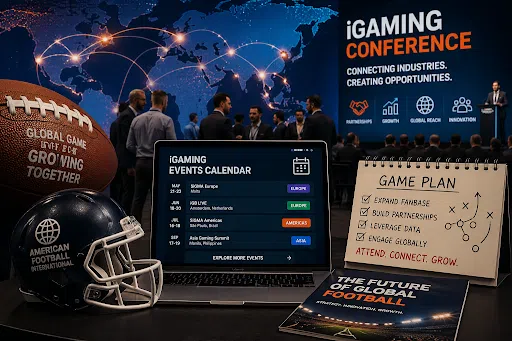
One often overlooked tool in this space is the iGaming events calendar. For football stakeholders, having visibility into upcoming conferences can be a strategic advantage. It allows organizations to plan attendance, schedule meetings, and align product launches or announcements with industry gatherings.
Instead of reacting to opportunities, leagues and businesses can proactively position themselves within key industry moments.
A well-structured event calendar helps answer questions like:
- Which regions are currently the most active in iGaming?
- Where are potential partners likely to be present?
- What themes are dominating industry discussions this year?
By aligning their own strategies with these insights, football organizations can move faster and more effectively.
Challenges and Considerations
Despite the clear opportunities, the intersection of football and iGaming is not without its challenges. Regulatory differences across countries can complicate partnerships, particularly when it comes to betting-related sponsorships.
There are also reputational considerations. Not all markets view gambling partnerships in the same way, and football organizations must carefully balance commercial interests with fan perception and long-term brand value.
Additionally, the knowledge gap can be significant. For traditional sports executives, the iGaming world—with its technical jargon and rapid pace—can be difficult to navigate without proper preparation.
The Future of This Convergence
Looking ahead, the relationship between global football and iGaming is likely to deepen rather than fade. As more leagues invest in digital transformation, the tools and strategies pioneered by iGaming companies will become increasingly relevant.
We can expect to see:
- More formal partnerships between football leagues and iGaming platforms
- Increased presence of football representatives at major industry events
- Collaborative innovation in fan engagement tools
- Greater integration of data-driven decision-making across both sectors
In many ways, iGaming conferences are becoming informal incubators for the future of international football.
Conclusion
The globalization of American football requires more than just talent and passion—it demands strategic thinking, technological adoption, and a willingness to learn from adjacent industries. iGaming conferences offer a unique environment where all of these elements come together.
For football organizations operating outside the United States, these events are no longer optional networking opportunities. They are strategic touchpoints where ideas are exchanged, partnerships are formed, and the future of the sport is quietly being shaped.